
Why Shrub and Flower Bed Design is Important
When it comes to shrub and flower bed design, getting it right can truly transform a property. Imagine walking through a beautifully arranged garden, where each plant is thoughtfully placed to create a harmonious, vibrant oasis. This is the goal—and it all starts with a well-designed plan.
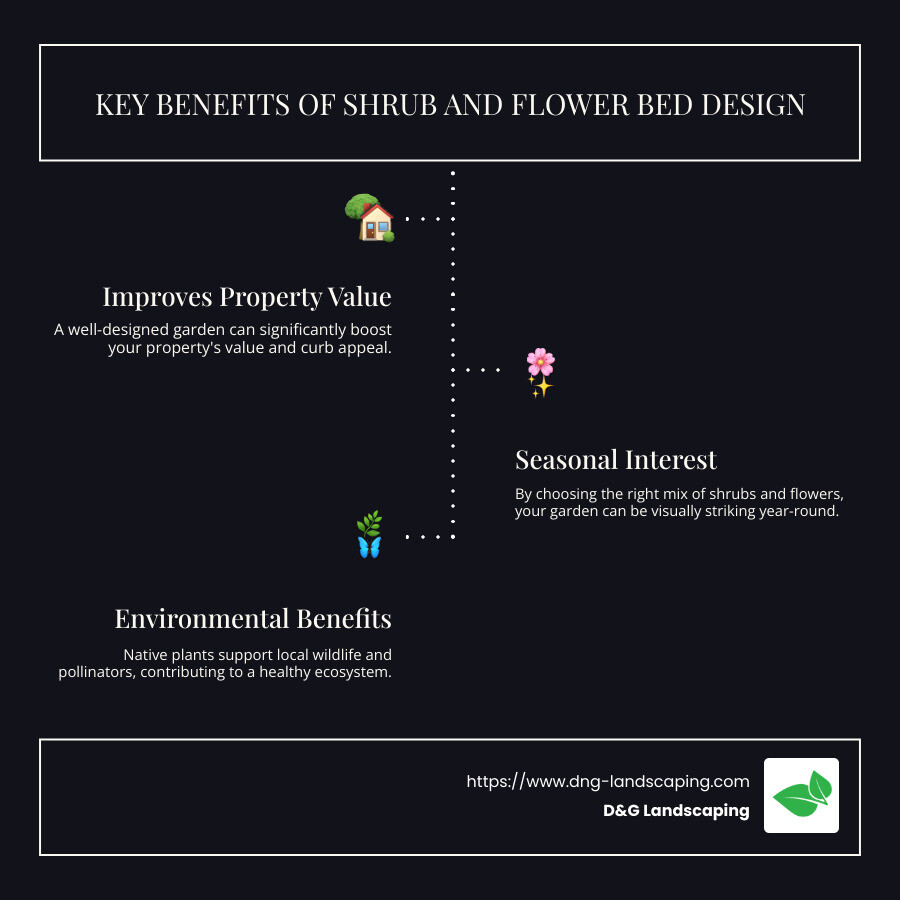
Key Benefits:
– Improves Property Value: A well-designed garden can significantly boost your property’s value and curb appeal.
– Seasonal Interest: By choosing the right mix of shrubs and flowers, your garden can be visually striking year-round.
– Environmental Benefits: Native plants support local wildlife and pollinators, contributing to a healthy ecosystem.
A well-executed shrub and flower bed design ensures balance and harmony in your landscape. It takes into account plant heights, mature sizes, color combinations, and focal points to create a cohesive look. The right shrubs and flowers, combined with proper soil preparation and planting techniques, can save you time and effort in maintenance, offering you more time to enjoy your outdoor space.
I’m Joe Dogherty, owner of D&G Landscaping. With over 30 years of experience in creating stunning shrub and flower bed designs, I am here to help you achieve the garden of your dreams.
Let’s explore how you can plan and design your perfect shrub and flower bed in the next section.
Planning Your Shrub and Flower Bed Design
Planning your shrub and flower bed design is the first and most crucial step to creating a beautiful and functional garden. Here’s how to get started:
Site Assessment
First, take a close look at your space. Measure the dimensions and note any existing features like paths or borders. This helps you decide the size and shape of your flower bed.
Key points to consider:
– Size and shape: Know the exact dimensions to plan the layout.
– Existing features: Paths, borders, and other landscape elements that might influence your design.
Soil Preparation
Healthy soil is the foundation of a thriving garden. Before planting, make sure your soil is in top condition.
Steps to prepare your soil:
1. Test the soil quality and pH levels: Use a soil testing kit to find out the nutrient content and pH level. This will tell you what amendments are needed.
2. Amend the soil: Add organic matter like compost to improve fertility and structure. Work it into the top few inches of soil.
3. Remove weeds: Clear the area of any existing weeds to reduce competition for nutrients.
Light Conditions
Understanding the light conditions in your garden is essential for choosing the right plants.
Types of light conditions:
– Full sun: At least 6 hours of direct sunlight per day.
– Partial sun: 3-6 hours of direct sunlight.
– Shade: Less than 3 hours of direct sunlight.
Different plants have different light requirements, so knowing your garden’s light conditions will help you select the right plants for each area.
Drainage
Good drainage is vital for plant health. Poor drainage can lead to root rot and other issues.
Tips for ensuring proper drainage:
– Test drainage: Dig a hole and fill it with water. If it drains within a few hours, your drainage is good. If not, you may need to improve it.
– Improve drainage: Add organic matter or create raised beds to improve drainage.
Underground Lines
Before you start digging, it’s crucial to know where any underground lines are located. This includes water, gas, and electrical lines.
Steps to locate underground lines:
– Call before you dig: In many areas, you can call a local service to mark underground utilities for free.
– Plan around lines: Make sure your design avoids these areas to prevent damage and ensure safety.
By carefully assessing your site, preparing the soil, understanding light conditions, ensuring proper drainage, and locating underground lines, you’ll be well on your way to creating a stunning and functional shrub and flower bed design.
Next, we’ll dive into choosing the right shrubs and flowers for your garden.
Choosing the Right Shrubs and Flowers
Selecting the right plants is crucial for a successful shrub and flower bed design. Here’s how to make the best choices:
Perennials and Annuals
Perennials come back year after year, making them a long-term investment for your garden. They often have shorter bloom times but can create a beautiful, ever-changing landscape.
Annuals, on the other hand, bloom all season but need replanting every year. They’re perfect for adding vibrant, consistent color.
Tips for balancing perennials and annuals:
– Use perennials for structure and annuals for color.
– Plant perennials that bloom in different seasons for year-round interest.
– Fill gaps with annuals to keep the bed looking full.
Shrubs and Trees
Shrubs and trees form the backbone of your garden. They provide structure, height, and year-round interest.
Choosing the right shrubs and trees:
– Consider mature size: Ensure they fit the space when fully grown.
– Think about bloom time: Mix early, mid, and late bloomers for continuous interest.
– Use evergreens: They add color and structure in winter.
USDA Hardiness Zones
Understanding your USDA Hardiness Zone helps you choose plants that will thrive in your climate. Zones are based on the average minimum winter temperature in your area.
How to use Hardiness Zones:
– Check your zone here.
– Select plants that are hardy to your zone or lower.
– Avoid plants that won’t survive your winter temperatures.
Soil Type and pH Conditions
Different plants have different soil preferences. Knowing your soil type and pH can guide your plant selection.
Testing and amending soil:
– Test your soil: Find out the pH and nutrient levels.
– Amend as needed: Add compost or other organic matter to improve soil structure and fertility.
– Match plants to soil: Choose plants that thrive in your soil type and pH. For example, azaleas prefer acidic soil, while lavender likes it alkaline.
Practical Example: Designing a Flower Bed
Let’s bring it all together with an example:
Suppose you’re designing a bed in Zone 5 with well-drained, slightly acidic soil. You might choose:
- Perennials: Echinacea purpurea (coneflower) for long-lasting summer blooms.
- Annuals: Petunias for vibrant color all season.
- Shrubs: Rhododendron for spring blooms and Physocarpus opulifolius ‘Dart’s Gold’ for foliage interest.
- Trees: A small Acer palmatum (Japanese maple) for structure and fall color.
By carefully selecting perennials, annuals, shrubs, and trees that suit your climate and soil, you can create a beautiful and sustainable shrub and flower bed design.
Next, we’ll explore how to layer your plants for a full and lush look.
Layering for a Full and Lush Look
Creating a layered look in your garden can make it appear more full and lush, even in smaller spaces. Here’s how to achieve this effect using different forms and heights of plants.
Different Forms and Mature Size
Start by selecting shrubs and trees with varying forms and mature sizes. This helps create a natural, tiered appearance, similar to what you might see in a forest.
- Tallest Layer: Choose the tallest shrubs or small trees for the back of your bed. These could be vase-shaped or lollipop-shaped plants like the Acer palmatum (Japanese maple) for structure.
- Middle Layer: Select medium-sized shrubs that complement the tallest layer. For example, if your tallest shrub is large and round, a slightly smaller, round or mounding shrub like Physocarpus opulifolius (Ninebark) can fill in the middle ground.
- Understory Layer: Use low-growing or prostrate shrubs to fill in the lowest layer. Plants like Lavandula angustifolia (Lavender) or Stachys byzantina (Lamb’s Ear) can serve this purpose.
Forest Mimicry
Think about how plants grow in nature. In a forest, you’ll find a mix of tall trees, mid-sized shrubs, and groundcovers. Mimicking this natural layering helps your garden look more organic and balanced.
- Tall Trees: Provide the canopy.
- Shrubs: Fill in the middle layer.
- Groundcovers: Cover the soil and suppress weeds.
Hillside Planting
If you’re planting on a hillside, you can still achieve a layered look. It’s all about placing the right plants at different heights on the slope.
- Top of the Hill: Place small trees or tall shrubs. This anchors the slope and provides height.
- Middle of the Hill: Use medium-sized shrubs. They help stabilize the slope and create a transition between the top and bottom layers.
- Base of the Hill: Low-growing shrubs or groundcovers. They prevent erosion and give a neat finish.
Practical Example: Layered Bed
Imagine you’re designing a layered bed on a flat area. Here’s how you might arrange your plants:
- Tallest Layer: Acer palmatum (Japanese maple) at the back.
- Middle Layer: Physocarpus opulifolius ‘Dart’s Gold’ (Ninebark) in front of the maple.
- Understory Layer: Lavandula angustifolia (Lavender) at the front.
This creates a visually appealing, tiered effect that looks full and lush. Plus, it mimics the natural layering you’d find in a forest.
Next, we’ll dive into how to combine colors and textures for a stunning garden.
Color and Texture Combinations
In shrub and flower bed design, combining colors and textures can make your garden visually stunning. Let’s explore how to create beautiful and harmonious combinations.
Color Schemes
Using a color scheme inspired by nature can make your garden look cohesive and pleasing.
- Nature as Inspiration: Think about your favorite natural moments, like a sunset or a rainy summer day. A sunset-inspired garden might feature vivid oranges, reds, and purples. For example, orange lilies, red kniphofia, and blue agapanthus look magical against a coral pink and lilac sky.
- Jewel Tones: Rich, vibrant jewel tones always make a garden pop. Try combining anemone flowers in shades of blue, pink, and magenta for a striking focal point.
Focal Color and Companion Plants
Choosing a focal color helps tie your garden together. Once you have a main color, select companion plants that complement it.
- Focal Color: If you have a shrub that blooms in orange, like certain rhododendrons, pair it with shrubs that have yellow leaves, such as ‘Dart’s Gold’ ninebark or golden mock orange. This accentuates the focal color and creates a unified look.
- Companion Plants: Use plants with similar or complementary colors. For example, variegated shrubs like ‘Goshiki’ false holly can add interest and contrast.
Texture
Texture adds depth and interest to your garden. Mixing different textures can make your garden more dynamic.
- Bold Flowers: Use bold, spiky flowers like irises next to softer, airy plants like catmint. This contrast creates a lively and artful design.
- Foliage: Don’t forget about foliage. Plants like lamb’s ear have soft, fuzzy leaves that contrast nicely with the glossy leaves of shrubs like boxwood.
Practical Example: Color and Texture
Imagine a flower bed with the following elements:
- Focal Color: Pink roses (David Austin ‘Ancient Mariner’).
- Companion Plants: Yellow-leaved shrubs like ‘Dart’s Gold’ ninebark.
- Textures: Spiky irises and soft lamb’s ear.
This combination of colors and textures creates a visually appealing and harmonious garden.
Next, we’ll explore some low-maintenance landscaping ideas to keep your garden looking great with minimal effort.
Low-Maintenance Landscaping Ideas
Creating a beautiful garden doesn’t have to mean spending all your free time maintaining it. Here are some low-maintenance landscaping ideas to help you keep your garden looking great with minimal effort.
Low-Maintenance Plants
Choosing the right plants is key to a low-maintenance garden. Opt for plants that are native to your area or those that require minimal care.
- Native Plants: Native plants are naturally adapted to your local climate and soil, making them easier to care for. They also support local wildlife. For example, in Massachusetts, consider planting black-eyed Susans or New England asters.
- Perennials: Unlike annuals, perennials come back year after year. This saves you time and money on replanting. Hostas and daylilies are great options.
Mulch Beds
Mulching is one of the simplest ways to reduce garden maintenance.
- Weed Suppression: A thick layer of mulch helps suppress weeds, reducing the need for constant weeding.
- Moisture Retention: Mulch helps retain soil moisture, meaning less frequent watering. Organic mulch, like wood chips or bark, is especially effective.
Weed Barriers
Using weed barriers can drastically cut down on the time you spend pulling weeds.
- Landscape Fabric: Laying down landscape fabric under your mulch can prevent weeds from sprouting. Just make sure to cut holes for your plants.
- Groundcover Plants: Planting dense, low-growing groundcovers like pachysandra or mondo grass can also act as a natural weed barrier.
Drought-Tolerant Plants
If you live in an area prone to drought or want to save on water bills, consider drought-tolerant plants.
- Succulents: Plants like sedum and hens-and-chicks store water in their leaves, making them ideal for dry conditions.
- Drought-Tolerant Shrubs: Shrubs like lavender and Russian sage thrive in dry soil and require minimal watering.
Salt-Tolerant Plants
For gardens near roads or coastal areas, salt-tolerant plants can withstand salty conditions.
- Beach Rose (Rosa rugosa): This hardy shrub is not only salt-tolerant but also produces beautiful, fragrant flowers.
- Bayberry (Myrica pensylvanica): Another great option, bayberry is a tough shrub that can handle salty soil and air.
Practical Example: Low-Maintenance Garden
Imagine a garden with the following elements:
- Low-Maintenance Plants: Black-eyed Susans, hostas, and daylilies.
- Mulch Beds: A thick layer of organic mulch to suppress weeds and retain moisture.
- Weed Barriers: Landscape fabric under the mulch.
- Drought-Tolerant Plants: Lavender and sedum in the drier areas.
- Salt-Tolerant Plants: Beach roses near the road.
This combination will help you create a stunning garden that requires minimal upkeep.
Next, let’s explore how to ensure your garden has seasonal interest and year-round appeal.
Seasonal Interest and Year-Round Appeal
Creating a garden that looks beautiful in every season is a rewarding challenge. By choosing plants that offer seasonal interest, you can enjoy a vibrant and dynamic garden all year long.
Spring Bulbs
Spring is the season of renewal, and nothing says “spring” like blooming bulbs.
- Daffodils: These cheerful yellow flowers are easy to grow and come back year after year. They bloom reliably in early spring, often before other plants wake up.
- Tulips: Available in a variety of colors, tulips are perfect for adding a splash of color to your garden. They bloom later in spring, extending the flowering season.
Planting a mix of early and late-blooming bulbs ensures continuous blooms throughout the spring.
Summer Flowers
Summer is the time for bold, colorful displays.
- Roses: Few flowers are as iconic as roses. Varieties like David Austin’s ‘Ancient Mariner’ can create a stunning focal point in your garden.
- Lavender: This drought-tolerant plant not only adds a pop of purple but also fills the air with a soothing fragrance.
For a burst of color, consider planting anemones in rich jewel tones like blue, pink, and magenta.
Fall Foliage
As summer fades, your garden can still shine with vibrant fall foliage.
- Maple Trees: Known for their stunning red, orange, and yellow leaves, maple trees can transform your garden into a fall wonderland.
- Mums: Perennial mums, especially cushion and daisy varieties, are perfect for adding late-season color. They bloom in various shades, from white to deep red.
Winter Interest
Winter doesn’t have to be dull. With the right plants, your garden can be interesting even in the coldest months.
- Evergreens: Plants like boxwood and holly provide structure and greenery year-round. They also offer a beautiful contrast against the winter snow.
- Berries: Shrubs like winterberry and holly produce bright red berries that stand out in the winter landscape.
White flowers can also catch the fading sunlight and moonlight, imparting a soft glow. Inspired by Vita Sackville-West’s all-white garden, you can enjoy a serene, moonlit garden even in winter.
By carefully selecting plants for seasonal blooms and year-round appeal, you can create a garden that is vibrant and inviting no matter the season.
Next, let’s explore how to create special features in your garden.
Creating Special Features in Your Garden
Adding special features can transform your garden from ordinary to extraordinary. Let’s explore how to create private nooks, seating areas, garden art, lighting, and pollinator shelters to improve your outdoor space.
Private Nooks
Imagine a cozy corner where you can escape with a book or simply enjoy the beauty of your garden. Creating private nooks is all about positioning and plant selection.
- Positioning: Place your nook in a quiet part of the garden, away from the main pathways.
- Screening Plants: Use tall shrubs like boxwood or holly to create a natural screen.
- Comfort: Add a comfortable bench or chair to make the space inviting.
Seating Areas
What’s a garden without a place to sit and soak in the view? Incorporate seating areas to enjoy your garden from different angles.
- Integration: Nestle a bench among flower beds or under a pergola.
- Materials: Choose materials that complement your garden’s style. Wooden benches blend well with natural settings, while stone or metal can add a modern touch.
- Comfort: Add cushions or pillows for extra comfort.
Garden Art
Garden art can add personality and charm to your garden. It can be functional or purely decorative.
- Birdbaths: A birdbath not only looks beautiful but also attracts birds, adding life to your garden.
- Sculptures: Place sculptures strategically to create focal points. Think about materials like metal, stone, or ceramic.
- Orbs and Arbors: Use orbs for a whimsical touch or arbors to frame pathways and entrances.
Lighting
Lighting can extend the enjoyment of your garden into the evening and create a magical atmosphere.
- Solar Lights: Place solar lights along pathways and among flower beds for an eco-friendly option.
- String Lights: Hang string lights around seating areas to create a cozy ambiance.
- Spotlights: Use spotlights to highlight specific plants or garden art.
Pollinator Shelters
Supporting local wildlife can make your garden both beautiful and beneficial.
- Pollinator Palace: Create a DIY pollinator palace or buy one from a garden center. It offers a safe haven for bees, butterflies, and other pollinators.
- Plant Choices: Include plants that attract pollinators, like lavender, echinacea, and butterfly bush.
- Water Source: Add a shallow water dish with stones for pollinators to rest and drink.
By incorporating these special features, you can create a garden that is not only visually appealing but also inviting and functional.
Next, let’s tackle some common questions about shrub and flower bed design.
Frequently Asked Questions about Shrub and Flower Bed Design
Designing a garden can be overwhelming, but we’re here to help. Let’s answer some common questions to make your shrub and flower bed design a breeze.
How to Arrange Shrubs in a Flower Bed?
Spacing, height, and width are crucial when arranging shrubs.
- Spacing: Ensure enough space for each shrub to grow to its mature size. Crowded plants compete for nutrients and light.
- Height and Width: Place taller shrubs at the back and shorter ones in front to create depth. Always check the mature height and width on plant labels.
Example: In a medium-sized bed, plant a tall shrub like a rose of Sharon at the back, medium shrubs like spirea in the middle, and low-growing plants like lavender at the front.
What Plants Look Good with Shrubs?
Pairing shrubs with the right plants can improve your garden’s beauty and functionality.
- Perennials: Use perennials like hostas and echinacea to fill gaps and add seasonal color.
- Annuals: Add annuals like marigolds for vibrant, temporary color.
- Groundcovers: Low-growing plants like pachysandra can cover the soil and reduce weeds.
Example: Combine shrubs like hydrangeas with perennials like black-eyed Susans and annuals like zinnias for a colorful, layered look.
How to Design a Perennial Garden with Shrubs?
Creating a garden with both perennials and shrubs ensures year-round interest.
- Centerpieces: Use shrubs as focal points or centerpieces. They provide structure and height.
- Seasonal Impact: Choose plants that bloom in different seasons. This ensures continuous interest.
- Bloom Times: Mix early bloomers like tulips with summer bloomers like roses and late bloomers like asters.
Example: In a perennial bed, place a shrub rose as a centerpiece. Surround it with spring daffodils, summer coneflowers, and fall chrysanthemums.
By understanding these basics, you can create a garden that’s both beautiful and easy to maintain.
Next, let’s dive into some low-maintenance landscaping ideas to keep your garden looking great with minimal effort.
Conclusion
At D&G Landscaping, we bring over 30 years of expertise to every project. Our team is committed to delivering high-quality, sustainable solutions that meet your unique needs. Whether you’re a homeowner looking to improve your garden or a business aiming to boost curb appeal, we have the skills and experience to make your vision a reality.
Expertise
Our team of professionals excels in creating stunning shrub and flower bed designs that are both beautiful and functional. We take into account every detail, from soil preparation to plant selection, ensuring your garden thrives in its environment. Our comprehensive landscape design services include everything from planning and planting to maintenance and hardscaping.
Customer Satisfaction
Customer satisfaction is our top priority. We work closely with you throughout the design process to ensure your needs and preferences are met. Our clients consistently praise our reliability, professionalism, and the stunning results we deliver. As one satisfied customer, Robert M. Amos, noted, “Very Professional! Showed up exactly when they said they would, finished on time, and everything looks awesome. Highly Recommend!”
Sustainable Solutions
Sustainability is at the heart of what we do. We focus on using native plants that thrive in local conditions, reducing the need for excessive watering and chemical treatments. Our designs aim to create beautiful landscapes that are also environmentally friendly. Whether it’s through proper soil preparation, efficient irrigation systems, or the use of organic matter, we ensure your garden is both beautiful and sustainable.
Ready to transform your outdoor space? Contact D&G Landscaping today to get started on your dream garden. We look forward to helping you create a stunning, sustainable landscape that you’ll enjoy for years to come.
